

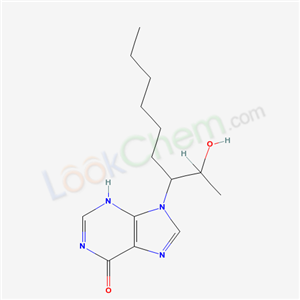
- Product Name 1,9-dihydro-9-[1-(1-hydroxyethyl)heptyl]-6H-purin-6-one
- cas 75166-67-5
- purity 99%

Others
1,9-dihydro-9-[1-(1-hydroxyethyl)heptyl]-6H-purin-6-one
Buy Good Quality 1,9-dihydro-9-[1-(1-hydroxyethyl)heptyl]-6H-purin-6-one 75166-67-5 with a minimum purity of 99%
- Molecular Formula: C14H22N4O2
- Molecular Weight: 278.35008
- Vapor Pressure: 5.55E-11mmHg at 25°C
- Boiling Point: 504.1°C at 760 mmHg
- PKA: 8.84±0.70(Predicted)
- Flash Point: 258.7°C
- PSA: 84.06000
- Density: 1.27g/cm3
- LogP: 2.42420
1,9-dihydro-9-[1-(1-hydroxyethyl)heptyl]-6H-purin-6-one(Cas 75166-67-5) Usage
|
Classification |
Naturally occurring chemical compound |
|
Function |
Central nervous system stimulant |
|
Mechanism of Action |
Blocks the action of adenosine, a neurotransmitter that promotes relaxation and sleep |
|
Adverse Effects |
a. Insomnia
|
|
Consumption |
Excessive consumption can lead to negative side effects |
|
Structure |
Contains a purine base with a 1-(1-hydroxyethyl)heptyl side chain attached to the 9-position |
|
General Description |
1,9-dihydro-9-[1-(1-hydroxyethyl)heptyl]-6H-purin-6-one, also known as Caffeine, is a naturally occurring chemical compound found in coffee, tea, and other plant-based products. It is a central nervous system stimulant that works by blocking the action of a neurotransmitter called adenosine, which promotes relaxation and sleep. Caffeine is commonly used to increase alertness, reduce fatigue, and improve concentration. It is also used in some medications to treat headaches and migraines. However, excessive consumption of caffeine can lead to adverse effects such as insomnia, nervousness, and increased heart rate. |
InChI:InChI=1/C14H22N4O2/c1-3-4-5-6-7-11(10(2)19)18-9-17-12-13(18)15-8-16-14(12)20/h8-11,19H,3-7H2,1-2H3,(H,15,16,20)


The order has been successfully placed. Our staff will contact you within 24 hours.